
Key Takeaways
- A DIY roof inspection takes 30–45 minutes and can catch visible problems like missing shingles, granule loss, and gutter blockages before they lead to leaks.
- Professional roof inspections cost $150–$350 in Monmouth County but include attic ventilation checks, flashing examination, and detailed photo reports.
- Cleaning gutters twice yearly prevents the leading cause of premature roof failure: water backup under shingles.
- Moss and algae growth on north-facing Ocean Township roofs trap moisture against shingles and can shorten roof lifespan if left untreated.
- Any inspection involving a ladder should include a spotter and proper fall protection. Falls account for over one-third of construction deaths nationwide, per OSHA construction safety statistics.
Your roof blocks every storm that rolls off the Atlantic. In Ocean Township, maintaining it means knowing what to check, when to act. When to call a pro with the right harness.
What Roof Maintenance Actually Means
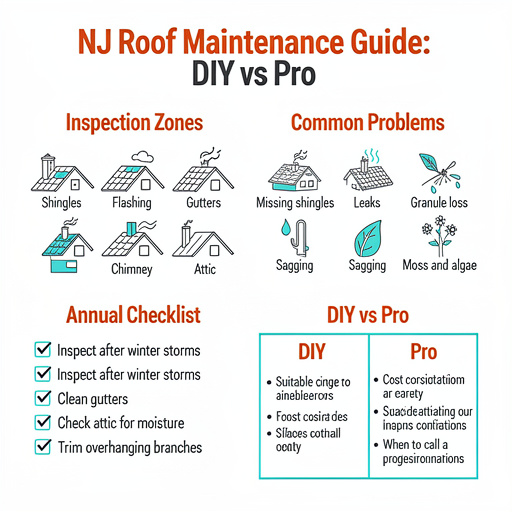
Roof maintenance is the routine inspection, cleaning, and minor repair work that extends the life of your roofing system. A maintenance routine includes checking shingles, flashing, gutters, attic ventilation, and sealants. It does not mean replacing your roof. It means making sure you do not have to replace it for another 10–15 years.
Industry guidelines recommend inspecting your roof at least twice per year. Check in spring and fall, and after any major storm. In coastal New Jersey, that advice is not conservative. It is necessary.
Salt air accelerates metal corrosion. Nor'easters drive wind-driven rain under loose flashing. And the freeze-thaw cycle of January and February turns tiny cracks into split shingles by March.
DIY Roof Inspection: What You Can Safely Check Yourself
You do not need to walk your roof to spot most problems. In fact, for single-story homes, a good ground-and-attic inspection tells you nearly everything you need to know.
From the Ground (10–15 minutes)
Walk the perimeter of your home with binoculars or a zoom camera. Look for:
- Missing or curled shingles: Wind lift is common after coastal storms. A missing tab exposes underlayment to UV damage.
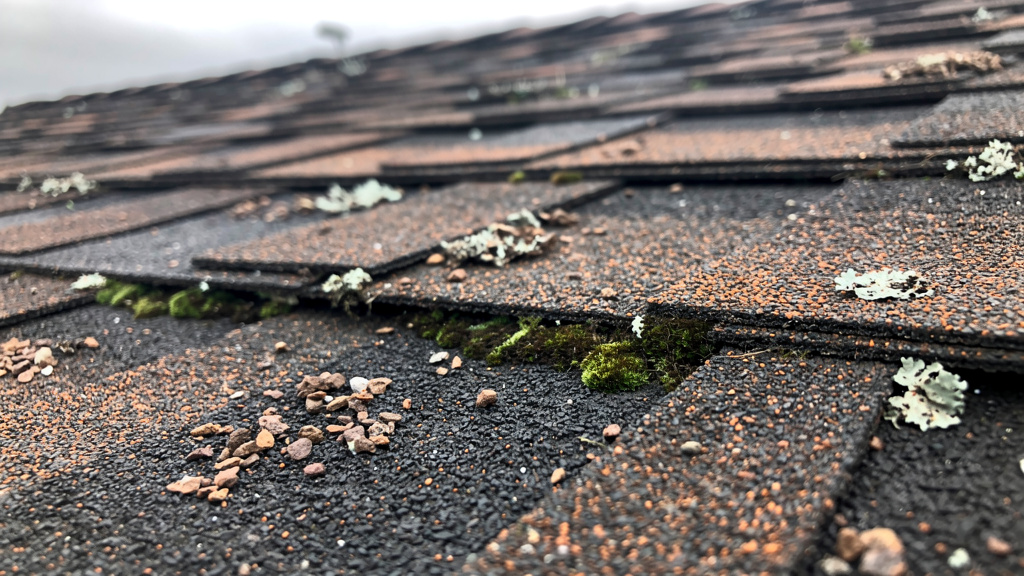
- Granule loss: Check your gutters and downspout exits. If you see piles of sand-like grains, your shingles are shedding their protective layer.
- Sagging gutters: Clogged or detached gutters overflow and funnel water behind fascia boards.
- Flashing damage: The metal strips around chimneys, vents, and wall intersections should lie flat. Gaps or rust spots mean water has a path inside.
- Moss or algae: Green or black streaks on north-facing slopes trap moisture. They eat away at asphalt shingles over time.
From the Attic (15–20 minutes)
Your attic is a diagnostic goldmine. Bring a flashlight.
- Water stains: Look at the underside of the roof deck around chimneys and vent pipes. Brown rings mean an active or recent leak.
- Daylight through boards: If you see sunlight, you have a gap. That gap lets in wind, rain, and pests.
- Insulation condition: Wet or compressed insulation near eaves signals ice damming or poor ventilation.
- Mold or mildew: A musty smell or dark spots on rafters means excess moisture is not venting properly.
If you find any of these issues, document them with photos. Most can wait a few days for a pro. Active dripping cannot. Our handyman services cover everything from emergency tarping to full roof repairs.
The Ladder Question: When to Climb and When to Stay Down
For a two-story home or any roof with a pitch steeper than 6:12, stay off it. Fall protection is required for construction work above 6 feet under OSHA standards. Your living room ceiling is not worth a broken hip.
If you do use a ladder:
- Place it on firm, level ground.
- Extend it 3 feet above the roof edge.
- Maintain three points of contact at all times.
- Have a spotter hold the base.
- Never climb in wet or windy conditions.
What a Professional Roof Inspector Does That You Cannot
A professional inspection goes deeper. It costs $150–$350 in Monmouth County, but the value is in what you miss, not what you find.
| Inspection Element | DIY Possible? | What a Pro Brings |
|---|---|---|
| Ground-level shingle check | Yes | Trained eye for subtle curl and crack patterns |
| Attic moisture scan | Partial | Infrared cameras that spot hidden leaks |
| Flashing seam inspection | No | Close-up examination of soldered and sealed joints |
| Ventilation calculation | No | CFM measurements and code compliance checks |
| Underlayment condition | No | Requires shingle removal in problem areas |
| Gutter pitch and drainage | Partial | Laser levels and water-flow testing |
| Photo documentation | Yes | Detailed report with repair priority rankings |
Professional inspectors also understand New Jersey home repair contractor regulations. They know that coastal towns often require enhanced wind ratings. They know which underlayment types perform best in high-humidity attics. And they carry insurance — so if they slip, it is not your homeowner's policy that takes the hit. For a full breakdown of seasonal upkeep, see our spring home maintenance checklist.
The Maintenance Checklist Every Ocean Township Homeowner Should Follow
Here is a seasonal rhythm that works for NJ coastal homes.
Spring (March–April)
- Clear gutters and downspouts of winter debris.
- Inspect shingles for wind or ice damage.
- Check attic for leaks after the first heavy spring rain.
- Trim overhanging branches before summer storms.
Summer (June–August)
- Treat moss and algae with a zinc or copper-based solution. The EPA safe pest control guidelines recommend avoiding harsh bleach mixtures. These mixtures kill landscaping below.
- Inspect caulk around vents and chimneys. Heat dries it out.
- Check for animal damage. Squirrels and raccoons target roof edges in summer.
Fall (September–November)
- Clean gutters again after leaf drop. This is the single most important maintenance task of the year.
- Inspect flashing before winter storms.
- Ensure attic vents are unobstructed. Proper airflow prevents ice dams.
Winter (December–February)
- Check attic insulation depth. The DOE attic insulation guidelines recommend R-49 to R-60 for attics in northern NJ.
- Remove heavy snow accumulation if safe — or hire a pro.
- Watch for ice dams along eaves. They force water uphill under shingles.
When DIY Maintenance Becomes a Professional Repair
Some symptoms mean the problem is already deeper than a maintenance fix.
| Warning Sign | What It Probably Means | Call a Pro? |
|---|---|---|
| Multiple missing shingles in one area | Wind damage or underlying deck rot | Yes |
| Water stains on ceilings | Active leak, possibly multiple entry points | Yes — urgently |
| Sagging roof deck | Structural damage or long-term water intrusion | Yes — urgently |
| Granules filling gutters | Shingles nearing end of life (15–20 years) | Yes |
| Daylight visible through roof boards | Holes or gaps requiring patching | Yes |
| Musty smell throughout attic | Ventilation failure or chronic leak | Yes |
If your roof is over 20 years old, shift from maintenance mode to replacement planning mode. Even the best asphalt shingles have a functional limit. Planning ahead lets you budget and schedule the work during off-peak seasons when roofing crews are more available.
Gutter Maintenance: The Most Ignored Part of Roof Care
Clogged gutters are the leading cause of premature roof failure in New Jersey. When water backs up, it flows behind fascia boards, rots soffits, and seeps into exterior walls. In winter, trapped water freezes and expands — lifting shingles and splitting seams.
We see this every spring. Homeowners call us for a roof leak. The shingles are fine. The flashing is fine. The gutters are packed with leaves and the downspout is clogged with shingle granules. A $150 gutter cleaning would have prevented a $1,200 drywall and fascia repair.
Clean gutters in late fall and early spring. If you have mature trees nearby, check them quarterly. Install gutter guards if you are tired of climbing ladders. They reduce debris by 60–80% but still need occasional rinsing. Clogged gutters are a leading cause of winter roof damage in Ocean Township.
Cost Comparison: DIY Upkeep vs. Professional Maintenance Plans
| Approach | Annual Cost | Time Required | Best For |
|---|---|---|---|
| DIY only | $50–$150 (cleaning supplies, treatments) | 6–10 hours/year | Handy homeowners with single-story homes |
| Annual pro inspection | $150–$350 | 1 hour (your time) | Most homeowners — catches problems early |
| Pro maintenance plan | $400–$800/year | Minimal | Busy homeowners, multi-story homes, rental properties |
| Reactive repairs only | $0 until failure | 0 hours | No one — this is the most expensive option long-term |
The math is straightforward. A maintenance plan costs less than one emergency leak repair. And it extends roof life by 5–10 years, pushing a $20,000 replacement further into the future.
If you are not comfortable on a ladder. Your roof is steep, or your home is two stories, hire a pro. The cost of an inspection is trivial compared to the cost of a fall or a missed leak. Our roofing services include full inspections, maintenance plans, and emergency repairs across Monmouth County.
Not sure what your roof needs? Call (732) 333-7800 for a free inspection and an honest assessment — no pressure, no upsell.
Frequently Asked Questions
1. How often should I inspect my roof in Ocean Township?
Twice per year — spring and fall — plus after any major storm. Coastal conditions in Monmouth County mean salt air, high winds, and rapid temperature shifts that accelerate wear.
2. Can I pressure wash my roof to remove moss?
No. Pressure washing strips granules from asphalt shingles and forces water under seams. Use a zinc-based moss treatment and a soft-bristle brush instead.
3. How long does an asphalt shingle roof last in NJ?
20–25 years is typical for architectural shingles in New Jersey. Coastal homes may see 15–20 years due to salt air and wind exposure. Regular maintenance can extend that by 5 years or more.
4. Will my homeowner's insurance cover roof maintenance?
No. Insurance covers sudden damage from storms, fire, or fallen trees. It does not cover wear and tear, neglect, or routine maintenance. Some carriers offer discounts if you provide proof of annual professional inspections.
5. What is the best time of year to schedule a roof inspection in Monmouth County?
Late spring and early fall are ideal. Crews are less busy than in summer, and the weather is predictable. Winter inspections are possible but limited by snow and ice.