
Key Takeaways
- A clogged air filter is the cause we see most. Checking and swapping it is a five-minute job that restores airflow to a struggling or frozen coil.
- If the unit runs but blows warm air, the likely culprits are low refrigerant, a failed capacitor, or a dirty condenser coil, rarely a dead compressor.
- A frozen evaporator coil needs the system off for several hours to thaw before any fix holds. Running it iced over can wreck the compressor.
- Low refrigerant always means a leak. Recharging it is federally regulated. Only an EPA-certified tech can legally do it.
- Smart thermostat habits help: the U.S. Department of Energy says proper setback saves up to 10% a year on cooling.
- Near the shore, condensate drain clogs and salt-air corrosion on the outdoor unit are far more common than inland. A seasonal check catches both early.
Your AC usually stops cooling for one reason: a dirty filter, a frozen coil, low refrigerant, a failed capacitor, or a clogged condenser. Most start small. Here's how to tell which one you've got, and what's safe to fix yourself. It's 90 degrees, the unit is running, and the house won't cool. Frustrating. Usually fixable, too.
Start With the Filter: It's the Cause We See Most
Before anything else, pull your air filter and look at it. A dirty filter chokes airflow across the indoor coil, and it's one of the most common causes we run into all summer.
A clogged filter does real damage fast. According to the Department of Energy, dirty filters reduce airflow and let dirt collect on the evaporator coil, which cuts the coil's ability to absorb heat. ENERGY STAR puts it plainly: a dirty filter makes the system work harder and waste energy, and you should change it at least every three months.
Here's the chain reaction. Low airflow lets the evaporator coil get too cold, ice forms, and a frozen coil blows little or no air at all. Swap the filter, and you've fixed the root of a lot of problems. If yours clogs every few weeks, that's a sign of a bigger airflow issue worth a look. It's the same kind of thing we flag during an HVAC tune-up.
The 7 Most Common Reasons an AC Stops Cooling
Each cause leaves its own fingerprint. Use the table to match what you're seeing, then read on for the fix. The cost ranges come from national 2026 repair data; shore-area labor tends to land at the higher end.
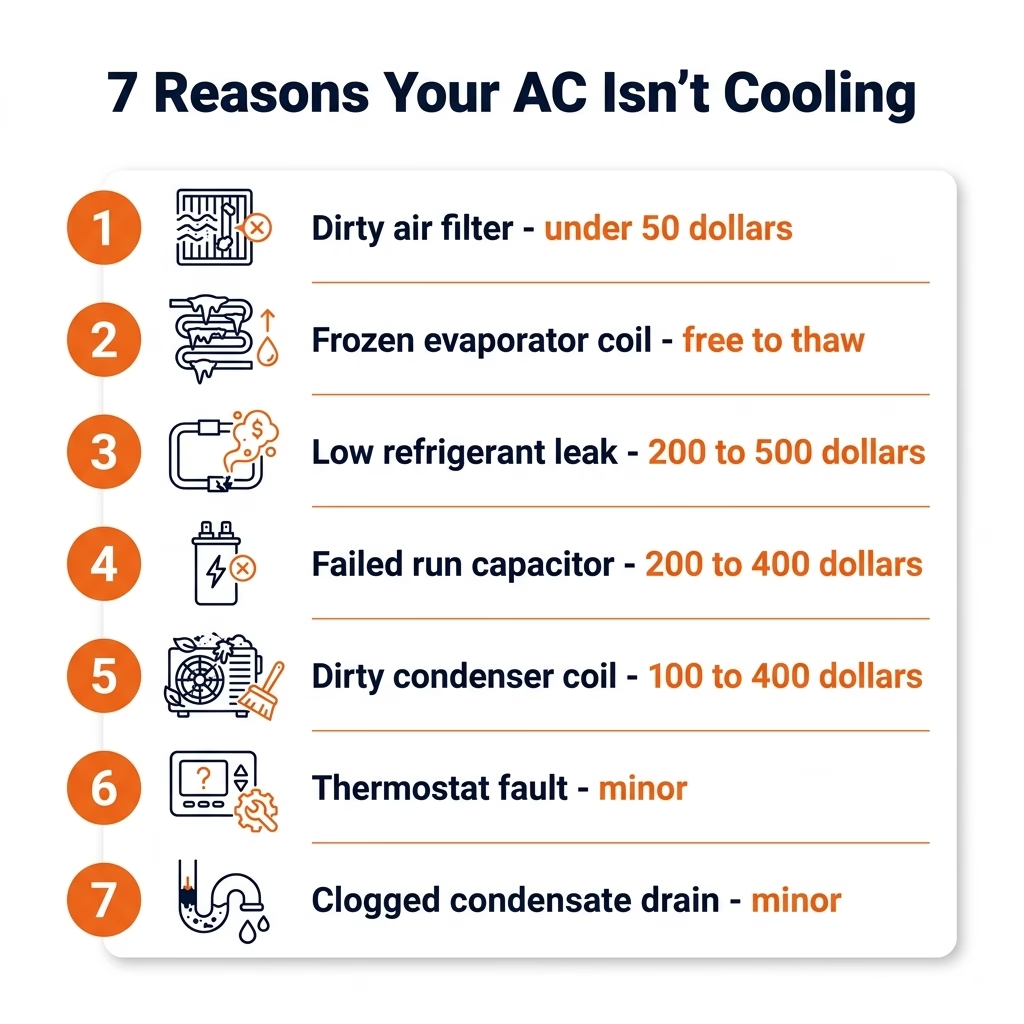
| Cause | What you'll notice | DIY or Pro | Typical cost to fix |
|---|---|---|---|
| Dirty air filter | Weak airflow, ice on the copper line | DIY | Under $50 for a replacement filter |
| Frozen evaporator coil | Ice on the indoor unit, water pooling, faint airflow | DIY thaw; Pro if it returns | Free to thaw; service call if it recurs |
| Low refrigerant (leak) | Runs nonstop, warm air, hissing or bubbling | Pro (EPA-certified) | $200–$500 recharge, plus leak repair |
| Failed run capacitor | The outdoor fan won't spin, humming, or clicking | Pro | $200–$400 |
| Dirty condenser coil | Outdoor unit is hot to the touch, weak cooling | DIY rinse; Pro deep clean | $100–$400 for a pro cleaning |
| Thermostat fault | Wrong mode, dead batteries, screen blank | DIY | Batteries, up to a thermostat swap |
| Clogged condensate drain | Unit shuts off, water near the indoor unit | DIY clear; Pro if it repeats | Minor service call |
A run capacitor is the small cylinder that gives the compressor and fan motor the jolt they need to start. When it fails, you'll often hear a hum from the outdoor unit while the fan sits dead and still. It's a cheap part, but it's wired into 240-volt power. That's a job for a licensed electrician or HVAC tech, not a DIY afternoon.
AC Running But Not Blowing Cold Air? Here's What That Means
If the unit runs but the air isn't cold, the cooling side has failed while the fan still works. The usual suspects are low refrigerant, a failed capacitor, a frozen coil, or a filthy condenser coil. The blower pushing warm air is the tell.

Refrigerant is the part people guess wrong most. Your system doesn't burn through it like gas. It's sealed. So if it's low, you have a leak somewhere in the coil or line set. Topping it off without finding the leak just buys a few weeks before you're hot again.
Here's the reassuring part: the most common causes are also the cheapest. A clogged filter, a frozen coil, or low refrigerant explains most no-cool calls we run into, and none of them means a dead compressor. The compressor is the part homeowners dread, but it's rarely the first thing to fail.
A dirty outdoor condenser coil is the quiet one. It sits outside collecting grass clippings, pollen, and shore dust, and a caked coil can't dump heat. Gently rinsing the fins with a hose helps. If cooling is still weak after that, the problem is deeper. Knowing when a system needs real repair versus a rinse saves you a service call.
What You Can Safely Fix Yourself, and What Needs a Pro
Some of this is genuinely DIY. Some of it isn't, and trying can cost you more than the original fix.
Safe to do yourself:
- Swap the air filter, and check it monthly during summer
- Turn the system off and let a frozen coil thaw fully (three to four hours)
- Rinse the outdoor condenser coil with a garden hose, and power off
- Replace dead thermostat batteries or fix the mode setting
- Clear a clogged condensate drain with a wet/dry vac
- Reset a tripped breaker once
Call a pro:
- Anything involving refrigerant. The EPA's Clean Air Act rules prohibit venting refrigerant during service, and handling it requires certification.
- A capacitor, contactor, or any 240-volt electrical part
- A coil that keeps freezing after a filter change
- A breaker that trips again the moment you reset it
If you reset a breaker and it trips a second time, stop. That's the system telling you something is shorted or overdrawing current. That's a real fire and equipment risk, not a nuisance.
Why Shore-Area Homes Have It Worse
Homes near the water deal with two things that inland homes don't. Salt air corrodes the aluminum fins on the outdoor condenser faster, so coils here often need cleaning sooner and replacement earlier. And summer humidity off the ocean means your system pulls more moisture from the air, which means more condensate, and more chances for that drain line to clog and shut the unit down.
Older housing stock around Ocean Township, Long Branch, and Asbury Park adds a wrinkle. Many homes still run aging systems built for R-22 refrigerant, which is no longer produced. On those, a refrigerant leak often tips the math toward replacement rather than repair. One more local note: most New Jersey towns require a permit to replace a condenser unit, so that DIY swap you saw online isn't really a weekend project here.
A little prevention goes a long way. Keep the filter fresh, hose the condenser each spring, and pair the system with a smart thermostat to ease the load during peak heat. The Department of Energy notes smart setback can save up to 10% a year on cooling. Those three habits prevent most of the breakdowns we get called for.
When the fix crosses into refrigerant, electrical, or a coil that won't behave, that's our cue. We Do It All Handyman has handled cooling repairs across Ocean Township and 50+ NJ towns since 2001, and a quick call gets you a straight answer and a free estimate, with no pressure and no upsell. Reach our team at (732) 333-7800 or start with our HVAC services page.
Frequently Asked Questions
1. Why is my AC running but not cooling?
The fan is working, but the cooling side has failed. The most common reasons are low refrigerant from a leak, a failed run capacitor, a frozen evaporator coil, or a dirty condenser coil. Start by checking the air filter and looking for ice on the indoor unit. Those points point to the cause fast.
2. How do I reset my AC if it's not cooling?
Turn the thermostat to off, then shut the system's breaker off for one to two minutes and switch it back on. Wait at least three minutes before restarting the thermostat so the compressor's internal pressure can settle. If it cools, great. If not, the reset only confirmed the problem is mechanical.
3. What is the "3-minute rule" for an AC?
After the system powers down, wait at least three minutes before turning it back on. Restarting too quickly forces the compressor to start against high internal pressure, which can trip the breaker or burn out the motor over time. Many modern thermostats are built with this delay automatically.
4. Should I turn off my AC if it's not cooling?
Yes, especially if you see ice on the unit or the line. Running a system with a frozen coil or low refrigerant can destroy the compressor, the most expensive part to replace. Switch it off, let any ice thaw fully, change the filter, and restart. If it still won't cool, call a technician before running it again.