

In this article:
- When the Atlantic hurricane season starts, peaks, and ends for Jersey Shore homeowners
- The four warning signs your gutters aren't ready for storm season
- A 60-day prep timeline you can follow before the season peaks
- What overflowing gutters actually do to your foundation during a storm
- Real cost data on gutter cleaning and when to call a pro instead of DIY
- How storm-season prep differs from the site's winter gutter guide
Key Takeaways
- Atlantic hurricane season runs June 1 through November 30, with most storm activity between mid-August and mid-October.
- Gutters should be cleaned at least twice a year, in spring and fall, and again before a storm if debris has built up.
- National gutter cleaning costs average $163, with most homeowners paying $119 to $228, depending on home height and gutter condition.
- Superstorm Sandy pushed a record 8.57-foot storm surge into Sandy Hook in Monmouth County, a reminder of how exposed the Jersey Shore is to coastal storms.
- FEMA recommends decluttering drains and gutters as one of the first steps in home hurricane prep.
- Overflowing gutters during a storm push water toward your foundation instead of away from it, raising the risk of basement flooding.
Hurricane season along the Jersey Shore runs from June 1 through November 30. The single best thing you can do before it starts is clear and inspect your gutters, because a clogged system sends storm water toward your foundation instead of away from it. This checklist walks you through what to do and when.
If you've read our winter gutter guide, you know clogged gutters cause ice dams and roof damage once temperatures drop. This is a different season with different stakes. Summer and fall storms bring heavy rain, wind-driven debris, and storm surge, not ice. The prep work looks different, too.
Why Hurricane Season Hits Jersey Shore, Gutters Harder

A gutter is a trough, usually aluminum or vinyl, that channels roof runoff to a downspout and away from your foundation. It only works if water can move through it freely.
Ocean Township and the rest of Monmouth County sit close enough to the coast that nor'easters and hurricane remnants show up almost every season. Storm surge alone reached 4 to 9 feet in Monmouth and Middlesex Counties during Superstorm Sandy, with the highest reading in the state recorded at Sandy Hook. That's an extreme case, but it shows how much water this stretch of coastline can see in a single event.
Local tree canopy adds to the problem. Many Ocean Township, Long Branch, and Eatontown neighborhoods have mature oaks and maples that were already established when these homes were built decades ago. Every summer storm knocks leaves, seed pods, and small branches into open gutters. By August, a gutter that was clear in May can be half full.
Older shore-area homes add a third layer. A lot of the housing stock near the water was built before modern flashing and drip edge standards were common. Water that overshoots a clogged gutter on one of these roofs finds gaps in older fascia boards fast.
How Can You Tell Your Gutters Aren't Ready for Storm Season?
Look for four things: sagging sections, water stains under the gutter line, plants growing in the trough, and water pouring over the edge during light rain. Any one of these means your gutters can't handle a real storm yet.
Sagging usually means the hangers have pulled loose from the fascia board, often from the weight of wet leaves sitting in the channel for months. Water stains on siding or trim below the gutter mean it's already overflowing in normal rain, not just during a downpour.
A gutter apron that's pulled away from the roofline is another warning sign. It's the small metal flashing piece that tucks under shingles and directs water into the gutter instead of behind it. If yours looks bent or gapped, water can get behind the gutter entirely and soak the fascia even when the gutter itself looks fine.
Your Storm-Season Gutter Prep Timeline
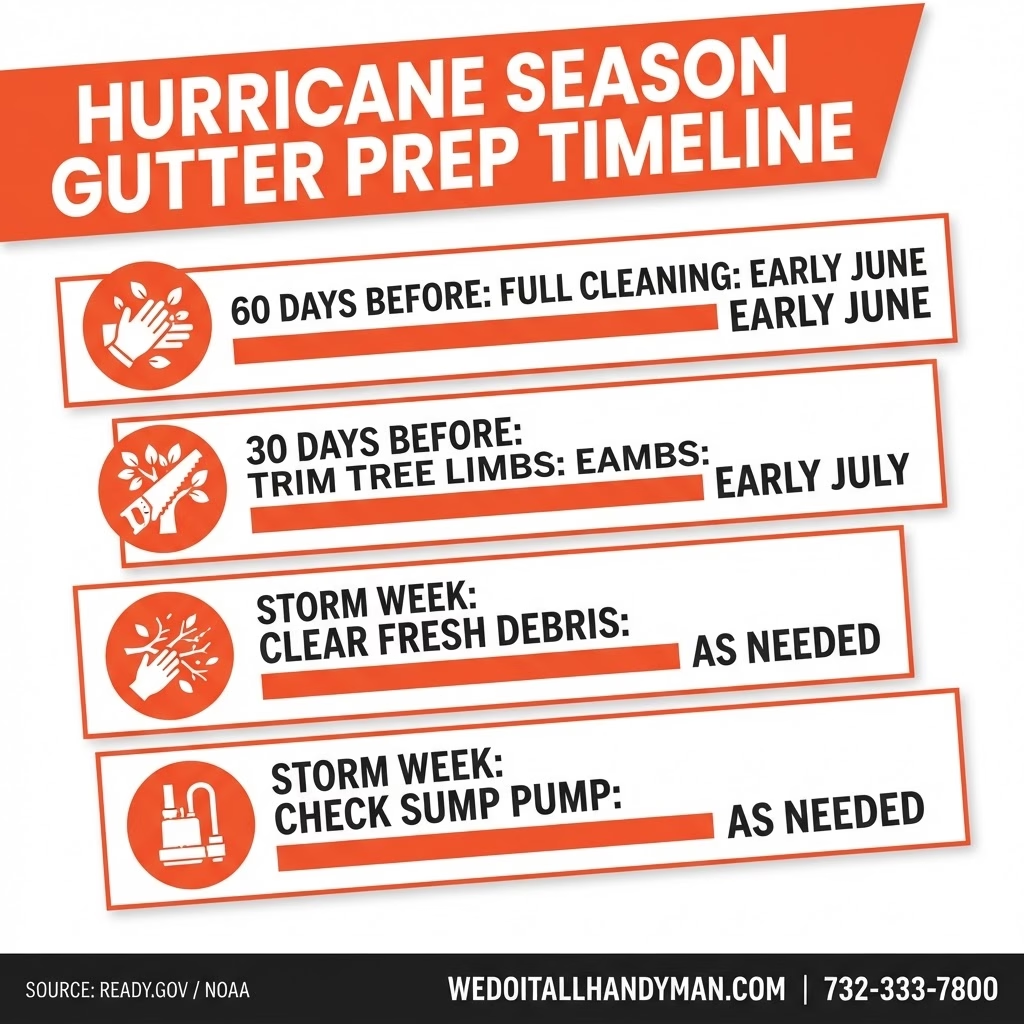
Spreading the work out beats scrambling the week a storm is forecast. Here's how we'd break it down for a typical Ocean Township home.
| Timing | Task | Why It Matters |
|---|---|---|
| 60 days before (early June) | Full gutter and downspout cleaning, hanger check | Clogged downspouts push water back over the gutter edge instead of away from your home |
| 60 days before | Inspect fascia, soffit, and gutter apron for gaps or rot | Older shore homes lose water behind the gutter, not just over it |
| 30 days before (early July) | Trim tree limbs hanging over the roofline | Fewer overhanging branches means less debris feeding the gutters mid-season |
| 30 days before | Test downspout extensions carry water at least 5-6 feet from the foundation | Extensions keep runoff from pooling and re-entering your basement walls |
| Storm week | Quick visual check, clear any fresh debris | A single storm can fill a clean gutter with leaves and small branches |
| Storm week | Confirm the sump pump is operational if you have one | Overflow that reaches the foundation often ends up as basement water |
Angi and HomeAdvisor pricing data show gutter cleaning running $119 to $228 nationally, with cost tied to house height and how clogged the gutters already are. A twice-yearly schedule, plus a quick check before a named storm, keeps most homes out of the higher end of that range.
What Happens If Your Gutters Overflow During a Storm?
Overflow sends water straight down your siding and pools at the foundation instead of draining away. That water finds cracks fast, and it's a common path into finished and unfinished basements alike during a heavy storm.
We've seen this pattern in plenty of Ocean Township basements: dry all year, then a few inches of standing water after one bad nor'easter. It's rarely the storm alone. It's usually a gutter that has been overflowing quietly for weeks beforehand. If your home already struggles with basement moisture, our spring flood prevention guide covers the grading and drainage side of this same problem.
A sump pump helps once water does reach the foundation, but it's a backstop, not a fix for a clogged gutter. If you're weighing whether to add one before this season's storms roll in, our sump pump installation cost breakdown walks through current NJ pricing.
Downspouts, Extensions, and Where the Water Actually Needs to Go
A downspout extension is a simple attachment that carries water further from your foundation than the downspout alone can reach. Most homes need at least 5 to 6 feet of clearance before the water is released onto the lawn or into a drainage bed.
Check that extensions haven't been knocked loose or buried under mulch since last season. It's a two-minute fix that prevents a surprising amount of foundation seepage.
If your roof is also due for a look, especially flashing around chimneys and valleys, our roof maintenance guide pairs well with this checklist since both jobs often get done in the same visit.
Skip the Ladder If Your Home Is Two Stories or More
Cleaning a single-story ranch gutter yourself is reasonable if you're comfortable on a ladder. A two-story colonial near the water is a different call. Wet, storm-damaged gutters get slick, and a fall from that height is a serious injury, not a bruise.
As a licensed New Jersey contractor (license #13VH09886800), our crew handles the roof-level work so you're not the one on the ladder during hurricane season. We fold gutter checks into most of our roofing and exterior visits across Ocean Township and the surrounding area.
Keep This Going Once Hurricane Season Ends
Hurricane season prep and winter gutter prep solve different problems, but they run back to back on the calendar. Once storm season winds down in late November, the risk shifts from wind-driven rain to ice dams and freeze-thaw cycles. Our winter gutter damage guide picks up exactly where this one leaves off.
Folding gutter checks into a broader seasonal routine also just works better long-term. Our seasonal home maintenance checklist covers the rest of what's worth checking each year, from roof flashing to exterior caulking.
If you're not sure your gutters can handle what's left of this hurricane season, a quick call gets you a free estimate and a straight answer about what actually needs doing. Reach us at (732) 333-7800 or take a look at our handyman services page for the full range of exterior work we handle across Ocean Township and the surrounding NJ areas.
Frequently Asked Questions
1. How often should I clean my gutters before hurricane season?
Plan on a full cleaning about 60 days before the season's peak, then a quick visual check before any storm that's specifically forecast for your area. NAHB recommends cleaning gutters at least twice a year, spring and fall, which lines up well with hurricane season prep in early summer.
2. What actually happens if gutters overflow during a storm?
Overflowing water runs down your siding and pools at the foundation instead of draining away through the downspout. Standing water is one of the more common paths into a basement during a heavy storm, especially in homes with older grading.
3. Is it worth installing gutter guards before hurricane season?
Gutter guards reduce how often you need to clean, but they don't eliminate the need entirely, especially with heavy debris like small branches during storms. They're worth it if you have a lot of tree canopy, but they still need a seasonal check.
4. When does hurricane season actually start and end in New Jersey?
The Atlantic hurricane season officially runs June 1 through November 30, with the highest storm activity typically between mid-August and mid-October. New Jersey is more likely to see nor'easters and hurricane remnants than direct hurricane landfalls, but coastal flooding risk still peaks in that window.